Trail Contracting Across a 45-Mile Radius
Recreational, ATV & Hunting Trail Clearing in Ellijay
Dense North Georgia forests create natural barriers that limit how landowners use their own property. North Georgia Driveways & Forestry Mulching provides recreational trail clearing across the region—including Blairsville, Cumming, and Chatsworth—that establishes defined paths through wooded areas for hunting access, ATV riding, hiking routes, and general property navigation. Custom trail routing accounts for terrain slope, existing vegetation patterns, and intended use while minimizing unnecessary ground disturbance across mountain properties..
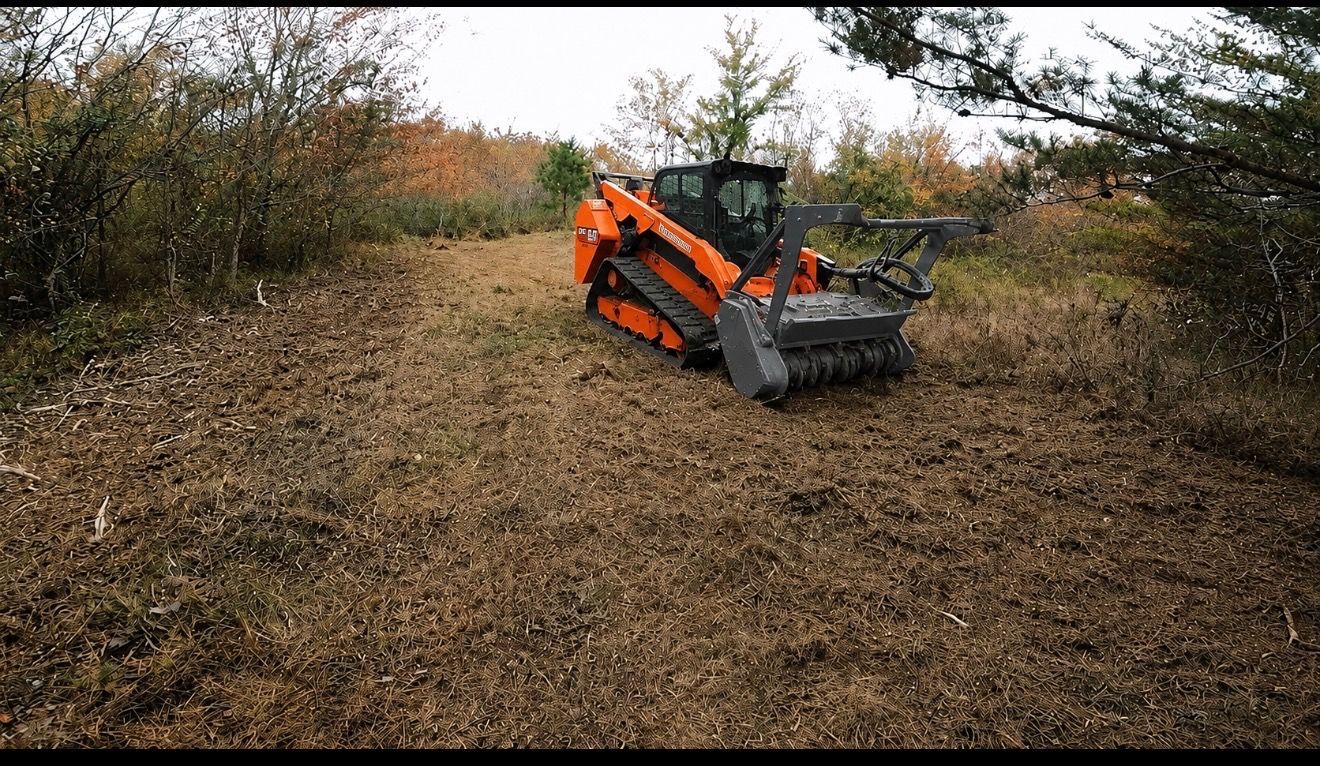
This service creates permanent access corridors through thick brush, allowing property owners to reach food plots, establish shooting lanes, connect remote sections of large tracts, and move equipment across previously inaccessible areas. Clearing removes saplings, undergrowth, and low-hanging branches that obstruct passage while preserving mature trees that provide shade and erosion control along trail edges.
Schedule an on-site evaluation to map out trail routes that match your property's layout and intended recreational use.
What Proper Trail Clearing Accomplishes
Trail width and clearing depth vary based on equipment type and seasonal use patterns—ATV trails typically require eight to ten feet of clearance to accommodate vehicle width and turning radius, while foot trails for hunting access need narrower four-to-six-foot corridors that reduce visual impact. Selective removal targets invasive species and dense undergrowth first, leaving established hardwoods that stabilize soil and maintain natural screening between trail sections.
Once trails are cut, you'll notice immediate improvements in how quickly you can traverse your property and access remote sections that previously required lengthy detours or difficult bushwhacking. Cleared shooting lanes provide unobstructed sight lines from elevated stands, food plot access becomes possible with utility vehicles rather than on foot, and navigation across large wooded tracts no longer depends on seasonal die-back of summer vegetation. Properly routed trails also reduce soil compaction by concentrating traffic onto designated paths rather than creating multiple informal routes that damage root systems.
Ongoing maintenance prevents re-encroachment from fast-growing species like privet, wild rose, and bramble that reclaim cleared areas within a single growing season if left unmanaged. Maintenance intervals depend on surrounding vegetation density and how often trails receive use—heavily wooded areas with thick understory typically require annual clearing passes to remain passable, while trails through more open hardwood stands may stay clear for two seasons before requiring attention.
Questions Property Owners Ask Before Clearing Trails
Landowners throughout Gilmer County frequently ask similar questions about establishing trail systems on recreational and hunting properties.
How wide should trails be cleared for different types of use?
ATV and UTV trails require eight to ten feet of width to allow safe passage and turning clearance, while foot trails for hunting access or hiking typically need only four to six feet, and equipment access roads for tractors or utility vehicles often require twelve feet or more depending on vehicle size and trailer use.
What happens to stumps and root systems during clearing?
Stumps are cut flush with ground level to allow smooth passage for foot traffic and vehicles, while root systems remain in place to prevent erosion on sloped terrain common throughout Blue Ridge mountain properties—complete stump removal is available when trails will accommodate paved or gravel surfaces.
How quickly does vegetation grow back after initial clearing?
In North Georgia's climate, fast-growing species like kudzu, privet, and bramble can reclaim trail edges within one growing season, while hardwood saplings and understory regrowth typically take two to three seasons to obstruct passages—maintenance schedules should reflect local growth rates and trail usage frequency.
Can trails be routed to connect specific property features?
Custom routing accounts for existing stand locations, food plot placement, property line access, creek crossings, and elevation changes to create functional networks that improve land management efficiency rather than arbitrary paths through wooded areas.
What equipment is used for trail clearing in dense mountain terrain?
Forestry mulchers handle thick brush, saplings up to six inches in diameter, and undergrowth in a single pass while leaving a mulched surface that stabilizes soil and suppresses immediate regrowth—this approach works more efficiently on steep slopes than traditional bush hogging or chainsaw clearing.
North Georgia Driveways & Forestry Mulching designs trail systems that reflect how you actually use your property for recreation and land management. Request a consultation to plan routing that improves access across wooded acreage while maintaining natural screening and terrain stability.