Eco-Friendly Land Clearing Within a 45-Mile Radius of Ellijay, GA
Forestry Mulching in North Georgia: Clear Access & Reduced Fire Risk
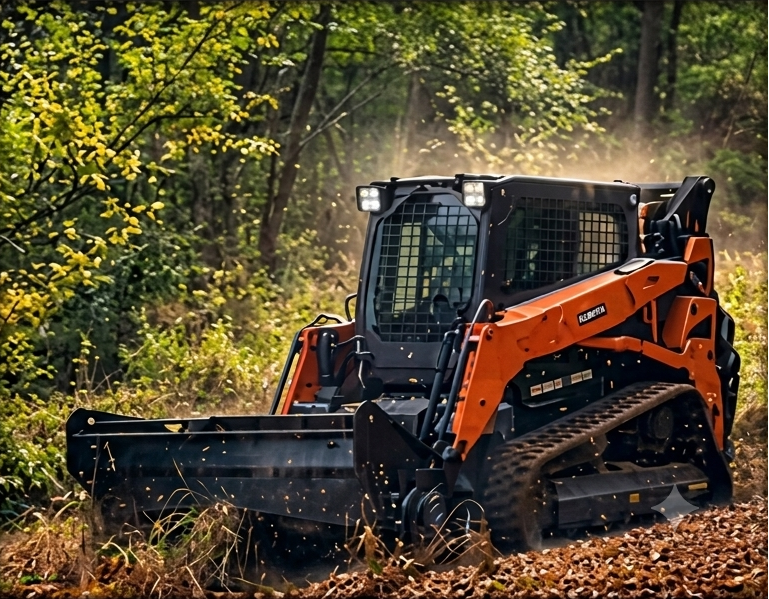
North Georgia Driveways & Forestry Mulching grinds brush, saplings, and overgrowth directly into mulch across properties in Ellijay, Blue Ridge, Jasper and surrounding communities. The process eliminates hauling and avoids smoke or pile burning while clearing land for homesites, trails, or recreational use. You see thick vegetation reduced to a layer of natural mulch that settles into the soil and holds slopes in place.
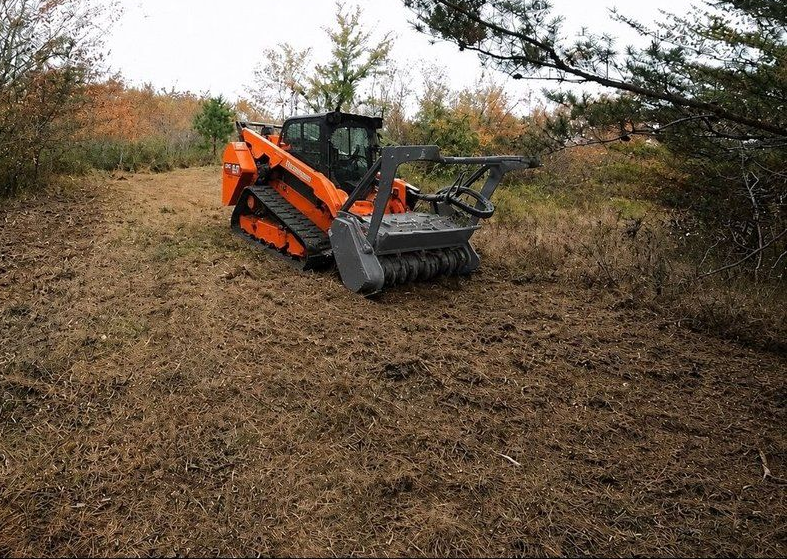
The equipment chews through dense underbrush, briars, and saplings up to several inches in diameter, leaving desirable trees standing while opening sightlines and access routes. Selective clearing preserves mature hardwoods and creates defined edges around property features without stripping the land bare or disturbing root systems that prevent erosion on steep North Georgia terrain.
Schedule a site evaluation to review vegetation density and clearing objectives for your property.
How Mulching Improves Wooded Mountain Property
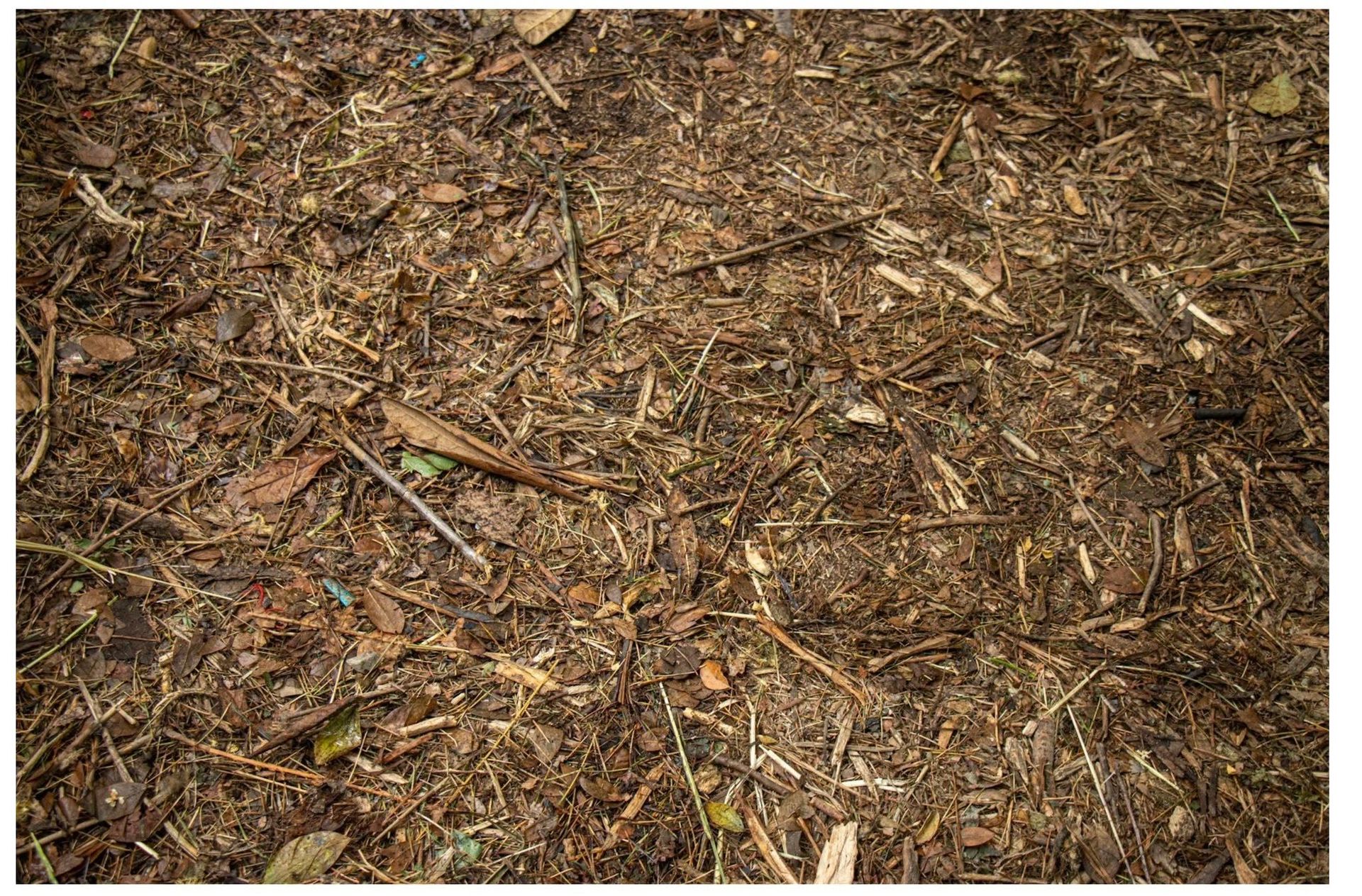
Forestry mulching cuts and grinds vegetation in a single pass, distributing shredded material evenly across the ground. The mulch layer decomposes slowly, adding organic matter to the soil while reducing erosion on slopes common throughout mountainous terrain. Water absorption improves as the mulch breaks down, and weed suppression occurs naturally where the ground layer remains thick.
After clearing, you notice immediate changes in visibility, foot traffic ease, and usable space. Overgrown lots become accessible for construction equipment, hunting preparation, or fence installation. The mulched surface remains stable underfoot and reduces mud during wet months, while the absence of brush piles or hauling debris means no secondary cleanup is required.
The method works efficiently on properties where access roads are narrow or nonexistent, since the equipment operates on steep grades and tight spaces without requiring trucks to haul debris offsite. Clearing projects on hunting land or trail systems benefit from minimal soil disturbance, which keeps established paths intact and avoids creating new ruts or compaction zones that channel runoff.
Questions About Clearing Overgrown Land
Property owners working with wooded acreage often want to understand what the process involves and how results hold up in mountain conditions.
What vegetation can forestry mulching handle?
The equipment grinds brush, saplings up to six inches in diameter, vines, briars, and dense undergrowth, but does not remove stumps or large established trees unless specifically targeted for removal.
How does mulching prevent erosion on steep slopes?
The shredded material creates a protective ground layer that absorbs rainfall impact, slows runoff velocity, and holds soil in place while roots decompose and new ground cover establishes naturally.
When is the best time to schedule land clearing in Ellijay?
Late fall through early spring avoids nesting season and allows cleared areas to stabilize before heavy summer storms, though equipment operates year-round depending on ground conditions and project urgency.
What remains visible after clearing is finished?
You see open ground covered with a layer of wood chips and shredded vegetation, with selected trees standing and defined boundaries where dense growth previously blocked sightlines or access routes.
How long does the mulch layer last before breaking down?
Depending on material thickness and weather exposure, the layer remains visible for one to three years, gradually decomposing into soil while suppressing competing vegetation during that period.
North Georgia Driveways & Forestry Mulching works with property owners across Gilmer County to reclaim overgrown acreage and establish functional land use. Request a consultation to review clearing options and site-specific conditions affecting your project.